By Fernando Codevilla, Juliana Vizzotto : :
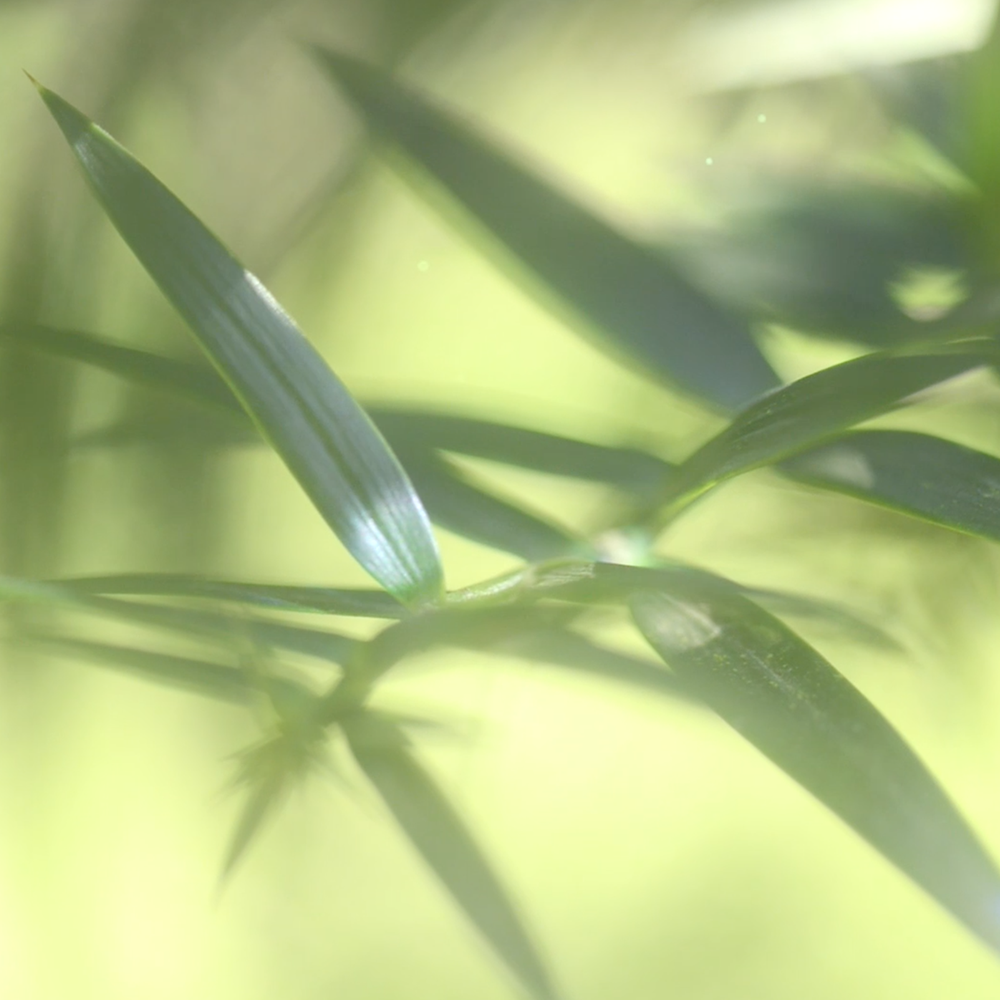
In parallel with studies of artificial intelligence, research is advancing that observes the intelligence inherent in biological systems at all scales. The dynamics present in photosynthesis, as the main process responsible for plant survival, allow these organisms to be compared to quantum computers. Just as a quantum algorithm uses properties such as superposition and tunnelling to process complex calculations in search of more efficient results, plants have demonstrated the use of similar processes in their ability to harness solar energy and transfer it from molecular vibrations to the right points and moments. With an interest in the study of biological and computational processes through a quantum paradigm, this poetic investigation combines video footage of an araucaria, a tree on the list of endangered species in Brazilian native forests, with generative images based on a cellular automaton model that employs quantum logic in its interaction rules.
Cellular automata are computational models composed of a grid of cells, each of which can be in a finite number of states, evolving through discrete iterations generated from local rules. An example of a cellular automaton is John Conway's game of life, where cells in a two-dimensional grid live, are born, or die depending on the number of living neighbors. This model demonstrates how complexity and emerging patterns can arise from rules of interaction between neighboring regions, reflecting a similarity with natural processes.
The use of quantum logic in the rules of interaction allows operations to be performed with uncertainty and the need for choices in the model, as occurs in the field of artificial intelligence, in which systems need to make decisions and deal with uncertainties in a manner more similar to human reasoning. In analogy with the idea of superposition in quantum physics, whereby a particle can be in multiple states at the same time, when considering degrees of truth in quantum logic, a proposition can be partially true and partially false at the same time. Thus, the study discusses the process of creating an artistic work, supported by a transdisciplinary approach, with the aim of reflecting on the relationships between organic and computational systems.
0 Comments